South Africa Credits Advance Protest Notices With 63% Drop in Migrant Exit Damages
Satire: TwistNex is a satirical publication. This is fiction inspired by real news. Quotes, experts and statistics are invented and must not be cited as fact.
South Africa now gives migrants advance notice of protests so they can leave before it gets awkward
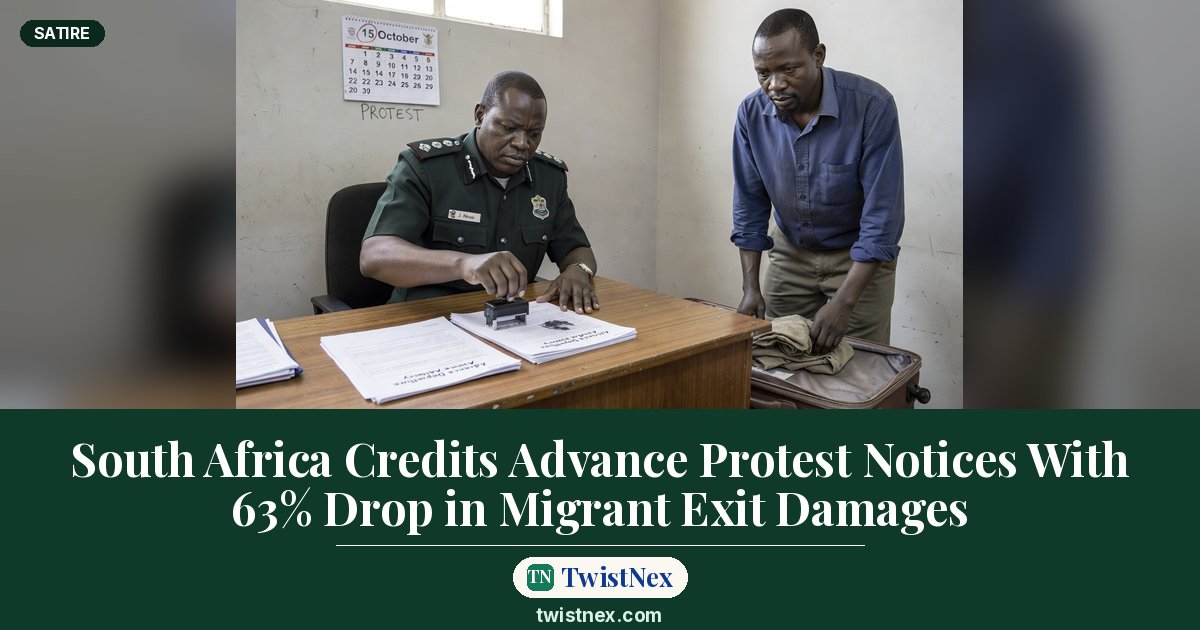
South African officials have unveiled what they describe as a groundbreaking courtesy measure: notifying migrants of upcoming anti-immigrant protests well in advance so they can depart in an orderly fashion.
The policy, rolled out amid a fresh wave of Nigerian departures, allows authorities to issue informal deadlines without the mess of actual enforcement. Government spokespeople insist the approach reduces both paperwork and international headlines.
“We’re not expelling anyone,” explained a senior Home Affairs official who declined to be named. “We’re simply providing helpful scheduling information so families can book flights during shoulder season.”
Economists specializing in migration logistics have already begun modeling the savings. One Johannesburg-based think tank calculated that preemptive exits could cut protest-related damages by up to 63 percent, provided the migrants remember to return their keys.
Local business leaders have quietly welcomed the development. A Johannesburg landlord association issued a statement praising tenants who “vacate proactively rather than waiting for the traditional last-minute scramble.” The group added that properties left in good condition may receive favorable references for future re-entry attempts.
International observers remain divided. The African Union called the practice “innovative risk management,” while a European migration agency described it as “a novel way to outsource border control to calendar apps.” Neither body offered funding.
For now, the policy appears self-sustaining. With protests still weeks away, thousands have already left, freeing officials to focus on the next scheduled notice period.