Kremlin Studies 200-Kilometer Monthly Driving Limit for Ordinary Motorists
Satire: TwistNex is a satirical publication. This is fiction inspired by real news. Quotes, experts and statistics are invented and must not be cited as fact.
Putin says Ukraine’s refinery strikes are creating only a minor fuel problem—mostly for people who drive.
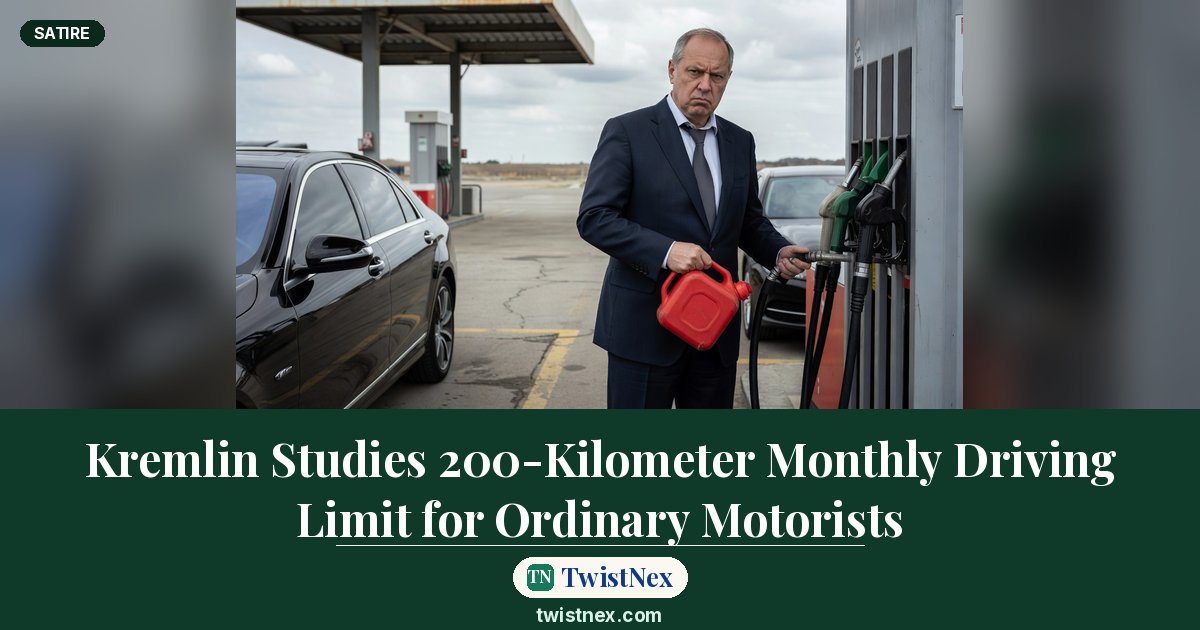
In an interview released by the Kremlin, President Vladimir Putin described Ukraine’s strikes on Russian refineries and pipelines as the cause of “a certain shortage” of fuel, while stressing the situation remains manageable and far from critical.
Senior officials quickly echoed the line, explaining that citizens should simply plan their travel more carefully and perhaps share rides with neighbors who still own working vehicles. One unnamed regional governor suggested that ministries might soon issue priority fuel coupons for essential workers, defined for now as senior bureaucrats and their extended families.
Independent analysts noted that the shortages have so far spared the presidential motorcade and the private fleets maintained by major energy companies. A Moscow think-tank director, speaking on condition of anonymity, said the government is studying “innovative conservation techniques” such as limiting non-essential driving to under 200 kilometers per month for ordinary motorists.
The measures appear calibrated to avoid disrupting the capital’s busy schedule of official ceremonies and state visits. Several oligarch-owned oil firms have already announced they will continue exporting refined products abroad, describing the policy as necessary to maintain Russia’s standing in global markets.
When asked whether the strikes might eventually affect military logistics, a Defense Ministry spokesman replied that the armed forces maintain “strategic reserves” separate from the civilian supply. He declined to specify how large those reserves are or how they are protected from further Ukrainian drones.
Public reaction so far has been muted. Long queues at gas stations have been explained by authorities as seasonal and unrelated to recent attacks. Economists privately forecast that any sustained shortage will simply accelerate the already steady rise in taxi and delivery prices, a development they described as “market adjustment.”