Pentagon Rolls Out User-Pays Model for Hormuz Transit During Iran Strikes
Satire: TwistNex is a satirical publication. This is fiction inspired by real news. Quotes, experts and statistics are invented and must not be cited as fact.
Washington has found a way to make the Strait of Hormuz pay for itself—one invoice at a time.
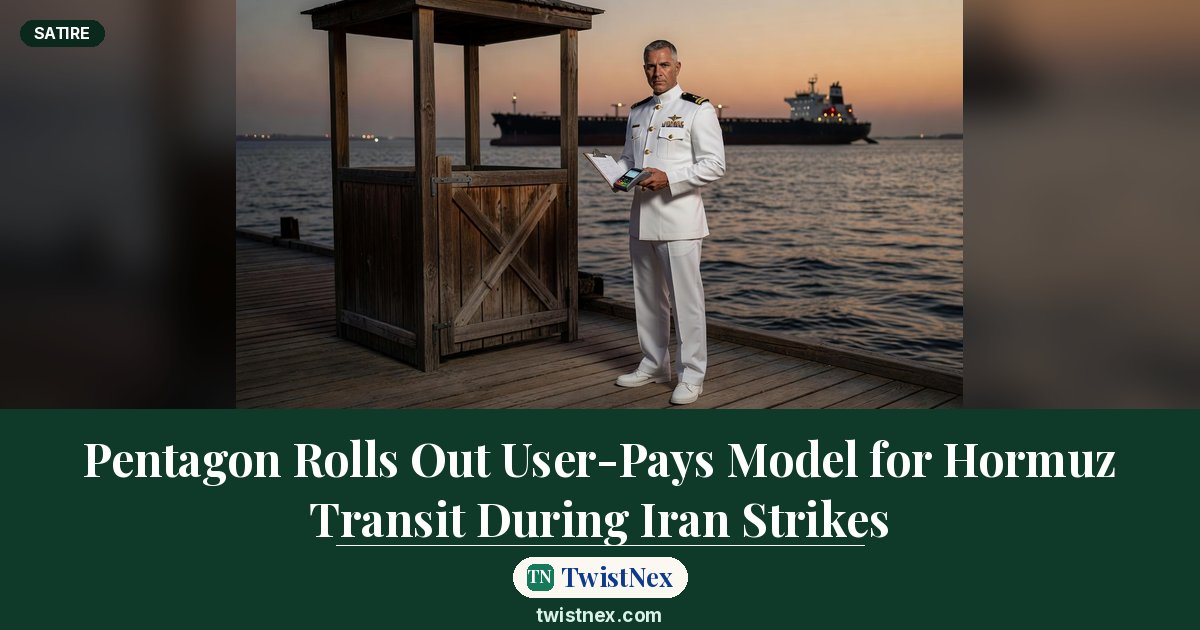
US officials confirmed Tuesday that American forces will begin levying passage fees on commercial traffic through the Strait of Hormuz, citing the need to offset costs from renewed strikes on Iran and the recent deaths of two soldiers in Jordan. The plan, described by Pentagon spokesmen as a straightforward user-pays model, comes after Iranian attacks damaged power infrastructure in Kuwait and triggered air-raid sirens across Bahrain.
Defense analysts say the toll schedule remains under discussion, though early drafts reportedly include separate rates for oil tankers, container ships, and any vessel requiring an escort past Iranian coastal batteries. One senior planner noted that the revenue could help replenish munitions stocks already depleted by the third consecutive night of operations against ports in Bushehr and Bandar Abbas.
Regional governments have reacted with customary caution. Kuwaiti authorities, still assessing damage to a second electricity and water facility, issued a statement welcoming any measure that might reduce future targeting of civilian utilities. In Bahrain, officials focused instead on the practical question of whether toll payments would be accepted in local currency or require electronic transfer before vessels enter contested waters.
Military spokesmen insist the arrangement is temporary and strictly administrative, separate from the wider campaign against IRGC targets. They declined to comment on whether discount vouchers would be offered to ships that already paid for allied naval protection earlier in the week.
Industry observers expect the first invoices to be issued within days, assuming traffic through the strait resumes at anything approaching normal volume.