Judge Pauses $111 Billion Merger So Antitrust Laws Can Pretend to Work
Satire: TwistNex is a satirical publication. This is fiction inspired by real news. Quotes, experts and statistics are invented and must not be cited as fact.
A judge hit pause on the $111B media merger so antitrust rules can enjoy one final performance before retirement.
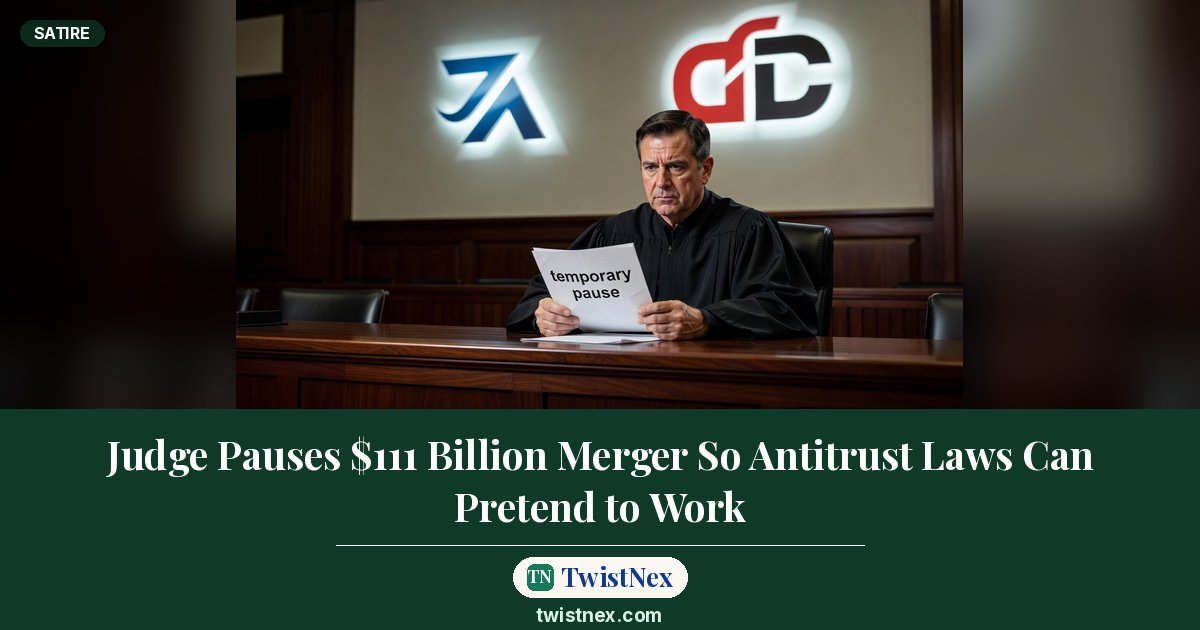
A federal judge has temporarily blocked the $111 billion Paramount-Warner Bros. merger, giving 12 states time to argue that combining two entertainment empires might reduce consumer choice. The ruling is being treated by industry analysts as a minor scheduling inconvenience rather than an actual obstacle.
Under the proposed deal, the new entity would control roughly 40 percent of U.S. film and television output, plus a substantial share of streaming libraries and news divisions. Lawyers for the companies described this level of concentration as "efficient vertical integration" that would allow seamless cross-promotion between news segments and cartoon characters. Opposing attorneys from the states countered that such efficiency could leave viewers with fewer options when deciding which version of the same story to watch.
Inside the merged company, planning documents already envision unified scheduling where a single executive team decides prime-time lineups across multiple networks. One internal memo, shown in court filings, proposed replacing separate newsrooms with a "content harmony division" responsible for ensuring narrative consistency across entertainment and information programming. Regulators expressed mild concern that this might limit viewpoint diversity, though they stopped short of calling it coordinated messaging.
Industry observers note that similar pauses have historically lasted between six and eighteen months before approvals are granted with modest conditions. A senior executive at the combined firm, speaking on background, predicted the final structure would simply include an extra compliance officer and a public pledge to maintain two slightly different logos on overlapping streaming apps.
The states involved have requested additional discovery on how the merger would affect local broadcast affiliates and regional news coverage. Court records show the companies responded by offering to divest two regional sports networks that already lose money. Observers expect negotiations to conclude with the states accepting the divestitures and the companies proceeding with the original integration timeline.