U.S. Grants Saudi Arabia Nuclear Access After Confirming Oil Revenue Stream Still Active
Satire: TwistNex is a satirical publication. This is fiction inspired by real news. Quotes, experts and statistics are invented and must not be cited as fact.
America just helped Saudi Arabia go nuclear and called it peaceful commerce. The fine print is still being translated.
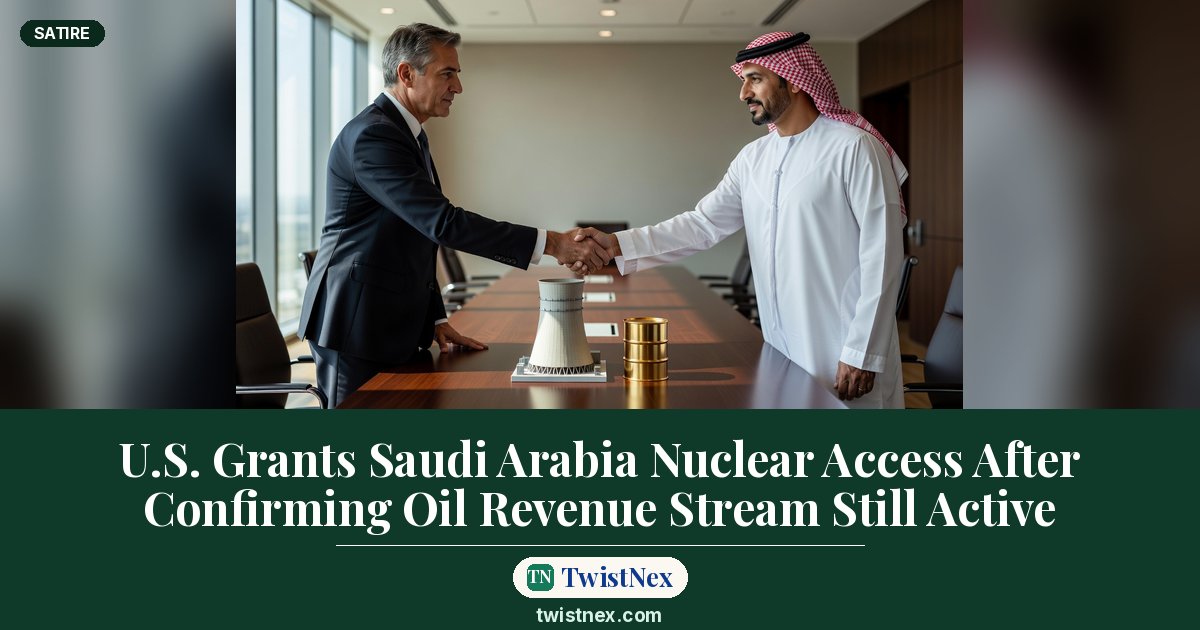
The United States has finalized a nuclear cooperation agreement with Saudi Arabia that the Department of Energy insists is strictly for civilian power generation and definitely not a geopolitical shrug at nonproliferation norms. Officials described the arrangement as giving American firms “great access” to the kingdom’s emerging nuclear sector, a phrasing that somehow makes reactor components sound like premium streaming content.
Under the deal, U.S. companies will supply technology and expertise while both sides repeat the word “peaceful” until it loses all meaning. Analysts tracking the agreement note that Saudi Arabia’s electricity demand is rising and that its oil revenues remain excellent for purchasing whatever Washington is currently selling. The same analysts declined to speculate on any other regional nuclear programs that might now require additional matching purchases.
A senior administration figure, speaking on condition of anonymity because the talking points were still being printed on hotel stationery, emphasized that the partnership includes rigorous safeguards. These safeguards reportedly consist of annual reports, mutual expressions of concern, and a shared understanding that nobody should mention enrichment levels at dinner. Independent observers placed the odds of this remaining entirely civilian at roughly the same level as a camel learning to file environmental impact statements.
Corporate spokespeople were quicker to focus on job creation, projecting that the deal could support dozens of American consultants who will fly business class to explain cooling systems to officials already familiar with heat. Environmental groups pointed out that Saudi Arabia sits atop the world’s largest oil reserves yet is now being assisted in building another energy source, an irony so large it requires its own reactor to contain.
The agreement is expected to take effect once both capitals finish pretending the timing has nothing to do with broader Middle East maneuvering. In the meantime, U.S. firms have begun preparing bids while quietly updating their risk-assessment spreadsheets to include the line item “sudden policy clarification.”
For now, the deal stands as a model of how two governments can cooperate on advanced technology by simply agreeing not to discuss why either side actually wants it.