White House Calls Extra $1,200 Per Household From Tariffs Small Price for Knowing Someone Pays
Satire: TwistNex is a satirical publication. This is fiction inspired by real news. Quotes, experts and statistics are invented and must not be cited as fact.
Trump's new tariffs on 60 countries prove once again that the best way to beat foreign competition is to charge Americans extra.
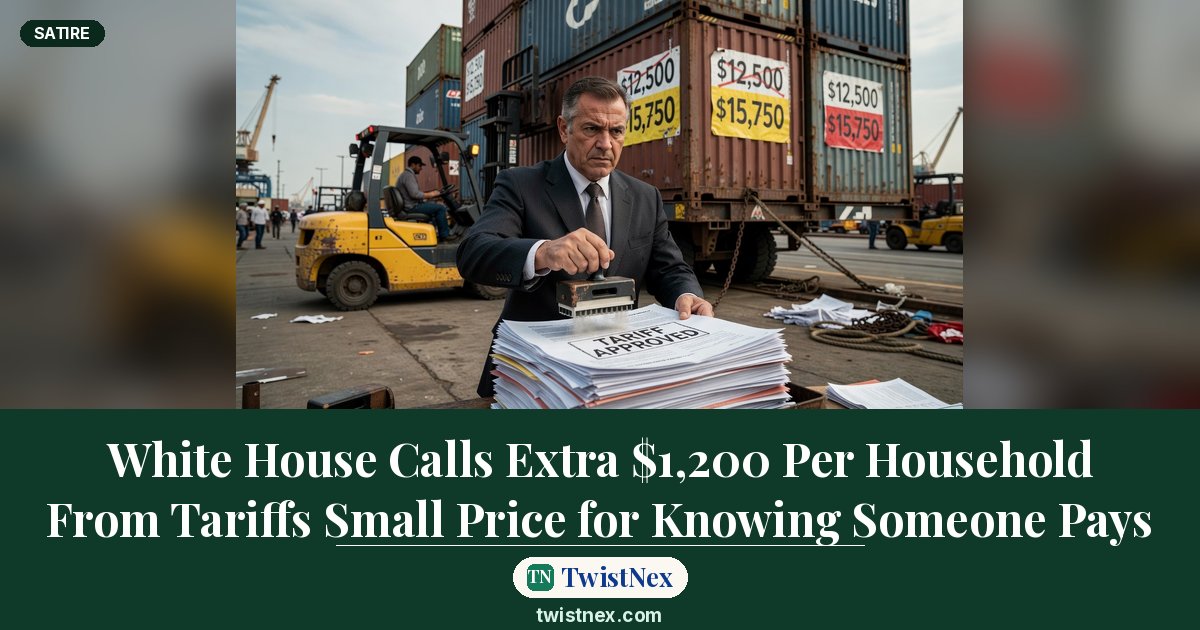
The Trump administration announced sweeping new tariffs on 60 trade partners this week, citing the urgent need to protect domestic industries that have somehow survived decades without them. Officials described the move as a necessary reset after earlier legal setbacks, insisting that higher costs on imports will finally teach foreign suppliers the value of American consumer spending power.
Economists at the hastily assembled Bureau of Expensive Solutions noted that the tariffs would add an estimated $1,200 per household annually, a figure they called "a small price for the satisfaction of knowing someone else is technically paying it." The policy applies to goods ranging from electronics to produce, ensuring that both smartphones and avocados will soon carry the proud label "Made Slightly Less Affordable in the USA."
White House aides explained that the duties target countries previously shielded by expiring exemptions, framing the decision as a bold return to leverage. One unnamed advisor added that any resulting inflation would simply prove the plan is working, since higher prices demonstrate demand for the newly protected American alternatives that do not yet exist in sufficient quantity.
Critics pointed out that similar tariff rounds in prior years raised costs without shrinking trade deficits, but administration spokespeople dismissed those outcomes as "fake news from the before times." The new measures include a special provision allowing the president to add countries mid-year if they appear to be enjoying trade too much.
Industry groups responded with cautious optimism, releasing statements praising the "strategic uncertainty" that would keep supply chains on their toes. Meanwhile, consumers were advised to stock up on foreign goods before the tariffs take effect, a suggestion that somehow managed to both acknowledge and undermine the policy's intent.
In the end, officials promised the tariffs would restore American greatness one receipt at a time, provided greatness is measured by the growing gap between wages and the cost of everyday items.