France Deploys A400M After Wildfires Ignore All Previous Diplomatic Requests
Satire: TwistNex is a satirical publication. This is fiction inspired by real news. Quotes, experts and statistics are invented and must not be cited as fact.
France finally calls in the air force after discovering wildfires don't respond to strongly worded statements.
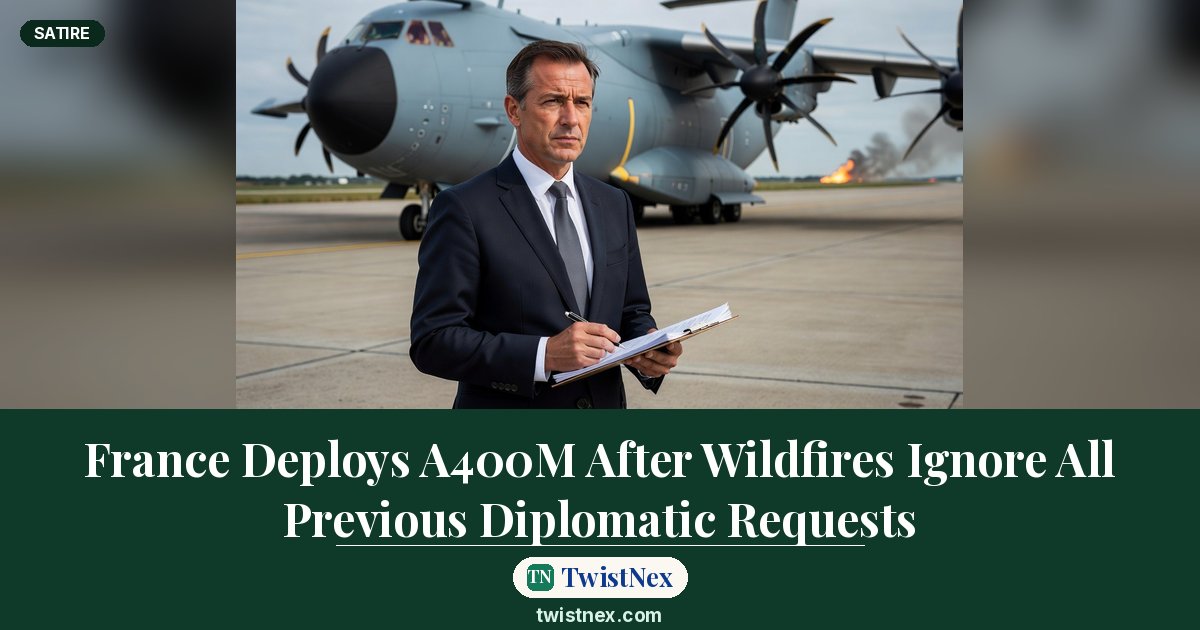
France and Spain have ordered the evacuation of more than 250,000 people as wildfires barrel toward cities, prompting the usual declarations of national emergencies and urgent appeals for international assistance. French authorities, surprised once again by summer, have accelerated deployment of an Airbus A400M to drop flame retardant on blazes that clearly never received the earlier memo about scheduled arrival dates.
Prime Minister Sébastien Lecornu reportedly decided the military aircraft should arrive ahead of its original timetable, a move experts describe as "revolutionary" in the field of reacting to events that have happened every year since records began. Spain has followed suit by treating its own crisis like an actual crisis, a bold strategy that appears to involve notifying citizens after the smoke has already reached their living rooms.
In related developments, Scotland's first minister labeled a Cairngorms blaze "very serious," a phrase now understood to mean "we are also out of ideas." International aid requests have poured in from governments that spent the preceding months debating whether climate change required any immediate policy changes beyond strongly worded emails.
Analysts at the Institute for Obvious Outcomes estimate that deploying cargo planes becomes 300 percent more effective once the fires have already merged and are heading for tourist districts. One unnamed official was overheard suggesting the aircraft could also be used to air-drop copies of the latest climate report directly onto the flames in hopes they would self-extinguish from sheer boredom.
As evacuations continue, authorities continue to stress that everything is under control provided no one asks follow-up questions about prevention.