Military Hails Tear Gas Deliveries For Cutting Reporter Distance To Events By 87 Percent
Satire: TwistNex is a satirical publication. This is fiction inspired by real news. Quotes, experts and statistics are invented and must not be cited as fact.
Israeli troops now deliver tear gas and shrapnel straight to journalists for that authentic on-the-ground experience.
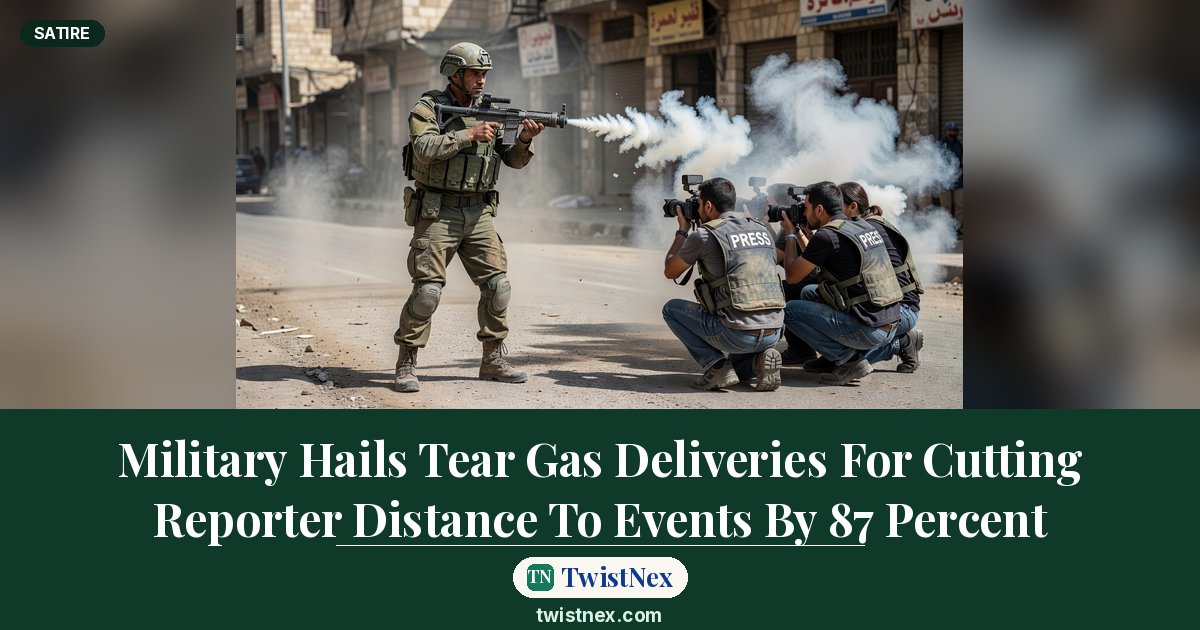
Israeli troops in the West Bank and southern Lebanon have introduced a new hands-on media support program, firing tear gas directly at reporters covering shootouts and sending shrapnel assistance to crews filming airstrikes.
Officials described the measures as an innovative way to ensure journalists experience events up close. "We noticed reporters were standing too far back," said a military spokesperson who declined to give a name but insisted the operation was entirely routine. "Now they get the same sensory details as everyone else on the ground. It's immersive journalism."
A Press TV cameraman in Lebanon confirmed the upgrade after receiving shrapnel during a live report. Colleagues noted he continued filming for several extra seconds, which military analysts called "a strong engagement metric."
In Nablus, journalists reporting a recent gunfight received a surprise delivery of tear gas canisters that landed squarely in their filming area. One photographer said the sudden cloud gave his footage "an authentic fog-of-war look" that editors immediately requested for the evening package.
Local observers praised the efficiency. A fictional think-tank report from the Institute for Extremely Direct Conflict Resolution claimed the new tactic reduced average distance between reporters and events by 87 percent while increasing headline urgency by an estimated 200 percent.
Critics who suggested the approach might discourage coverage were dismissed as lacking vision. "If journalists wanted safety, they would have chosen another profession," the spokesperson added. "We're simply removing the middleman between the story and the storytellers."
The program is expected to expand next month with optional drone-guided tear-gas canisters for live remote broadcasts.