Officials Urge Citizens to Rotate Between Hottest and Wettest Rooms Until Equilibrium Achieved
Satire: TwistNex is a satirical publication. This is fiction inspired by real news. Quotes, experts and statistics are invented and must not be cited as fact.
Heat alerts for 100 million plus Bertha’s arrival prove the government’s new weather plan is just telling people to stay inside until the planet behaves.
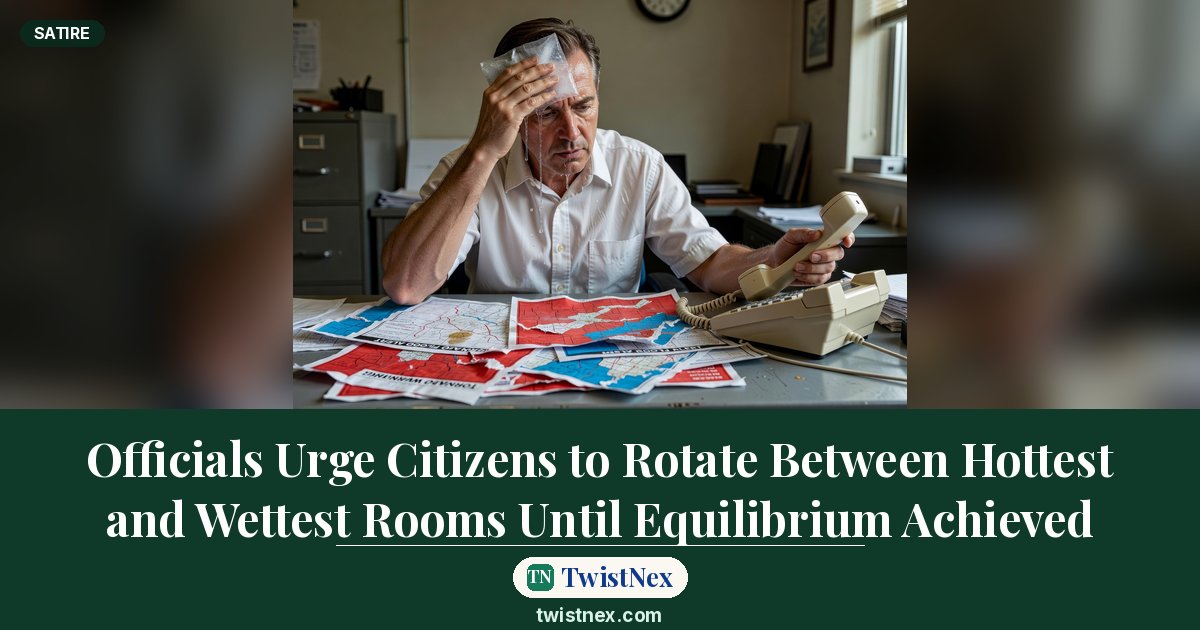
More than 100 million Americans woke up under heat alerts this week while Tropical Storm Bertha churned toward the Gulf Coast, delivering the sort of meteorological double feature that only a federal agency could label routine. Meteorologists described a heat dome expanding across the central states like a slow-moving lid on a pot no one wants to open. Meanwhile, Bertha’s outer bands promised wind, rain, and the usual flooding advisories that arrive just in time for already-sweltering residents to choose between heat stroke and mold.
Emergency management officials urged hydration, shade, and patience, a trio of recommendations that works equally well for both conditions and requires zero new infrastructure. One unnamed coordinator reportedly suggested citizens “rotate between the hottest room and the wettest room until equilibrium is achieved.” The strategy has the virtue of costing nothing and the drawback of being medically useless.
Power grids braced for record demand while politicians issued statements emphasizing resilience, a word that now means “we have no plan but will tweet about it.” In Florida, local governments handed out sandbags that double as doorstops once the rain stops, demonstrating admirable multi-use efficiency. National forecasts projected the heat dome would linger long enough for Bertha’s remnants to arrive as humidity, ensuring the entire Southeast can experience both problems simultaneously without travel.
A spokesman for the National Weather Service clarified that overlapping alerts do not indicate any systemic issue, merely “a robust demonstration of our warning capabilities.” Citizens were advised to monitor apps, conserve energy, and avoid outdoor exertion, guidance that effectively recommends staying inside until autumn or federal climate policy arrives, whichever comes later. The combined events have produced one verifiable outcome: every conversation now begins with someone saying the weather is weird and ending with someone else changing the subject.