White House Lists Miscellaneous Extortion as Line Item in Hormuz Toll Forecast
Satire: TwistNex is a satirical publication. This is fiction inspired by real news. Quotes, experts and statistics are invented and must not be cited as fact.
Trump wants to turn the Strait of Hormuz into a toll road while Iran says it’s only talking to Oman—peak foreign policy as customer service dispute.
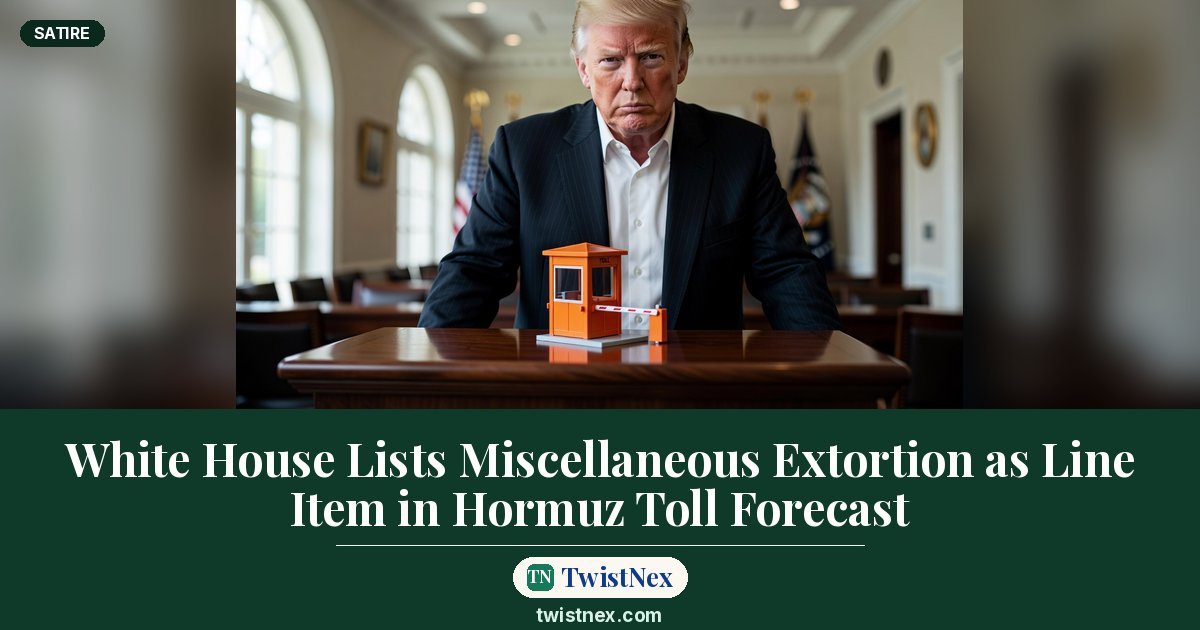
President Trump announced Saturday that the United States will begin charging tolls in the Strait of Hormuz unless a final agreement with Iran is reached within sixty days, turning the world’s most critical oil choke point into what one senior official privately called “the planet’s first interstate with a booth.”
Iranian officials responded by insisting they are negotiating only with Oman and have no talks underway with Washington, a clarification delivered with the weary tone of someone explaining that the pizza place is closed on Tuesdays. Tehran described the proposed shipping coordinates as nearly settled, leaving the United States in the awkward position of threatening to collect quarters from tankers that are not currently returning its calls.
White House aides immediately began circulating internal estimates projecting $12 billion in annual revenue from supertankers, though one slide reportedly listed “miscellaneous extortion” as a separate line item. Shipping analysts warned that any attempt to enforce the tolls would require the U.S. Navy to station revenue agents on every vessel, a logistical challenge described as “like TSA but wetter and more likely to start a war.”
Trump insisted the plan was simple, telling reporters the strait “isn’t that complex” and that Oman could be cut in for ten percent “as a finder’s fee.” Meanwhile, six Saudi tankers rerouted through the Gulf of Aden to avoid both Iranian threats and any future American invoices, proving once again that global energy markets respond fastest to the fear of a receipt.
Democratic lawmakers seized on the toll proposal as further evidence of policy chaos, noting that the administration’s previous green light to West Bank settlers had already produced enough international friction without adding paywalls to maritime traffic. Oil prices edged higher on the news, which traders interpreted as the market pricing in both geopolitical risk and the possibility that someone, somewhere, will soon be asked to swipe a card.