FIFA President Offers Fractional World Cup Stakes to Africa, Receives Sequence of Polite Refusals
Satire: TwistNex is a satirical publication. This is fiction inspired by real news. Quotes, experts and statistics are invented and must not be cited as fact.
FIFA's private equity pitch for the World Cup meets polite African silence and fresh resignation talk.
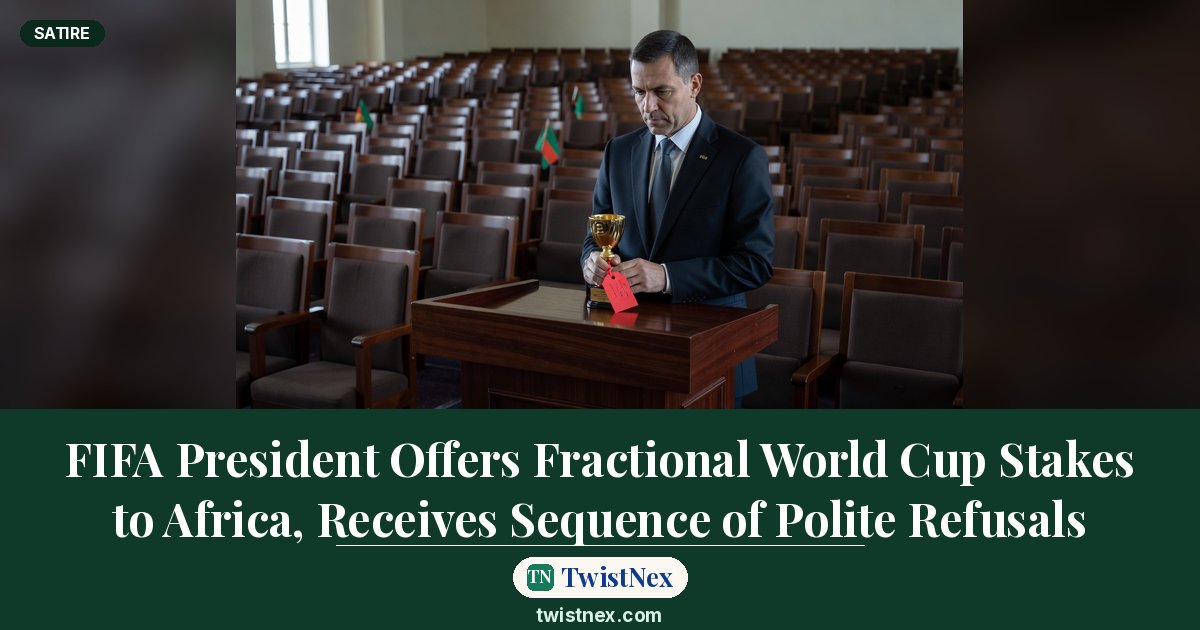
FIFA president Gianni Infantino floated the idea of selling private stakes in the World Cup and then appeared genuinely surprised when several African federations failed to rush forward with endorsement forms. The move, pitched as a bold financial innovation, instead prompted renewed calls for his resignation after it became clear the governing body was treating the tournament like a timeshare opportunity.
Infantino defended the proposal by noting that global football needed fresh capital, a claim that landed with particular force in regions still waiting for promised infrastructure from previous hosting bids. Observers noted the timing coincided with ongoing questions about transparency in FIFA's revenue streams, turning what was meant to be a quiet consultation into a public standoff.
African confederation officials have so far withheld official backing, opting instead for a sequence of noncommittal statements that read like polite refusals to a group dinner invitation. Several national federations echoed the hesitation, citing recent governance concerns rather than any sudden shortage of enthusiasm for the sport itself.
Inside FIFA circles, the episode has been framed as a routine misunderstanding, with one unnamed advisor suggesting the president simply forgot that not every asset is automatically available for fractional ownership. External analysts countered that selling slices of the World Cup carries the same optics as auctioning off naming rights to a national anthem.
The episode has left Infantino fielding questions about whether he plans to step down, a development that has transformed routine press briefings into exercises in careful phrasing. African football bodies continue to review the proposal without committing, a stance that has so far produced more silence than solidarity statements.
For now, the World Cup remains publicly owned while its leadership explores whether private investors might prefer a different model entirely.