Syrian Court Sentences Assad to Death, Effective Upon His Voluntary Return From Moscow
Satire: TwistNex is a satirical publication. This is fiction inspired by real news. Quotes, experts and statistics are invented and must not be cited as fact.
Syria sentences Assad to death in absentia, proving justice works best when the defendant has already left the chat.
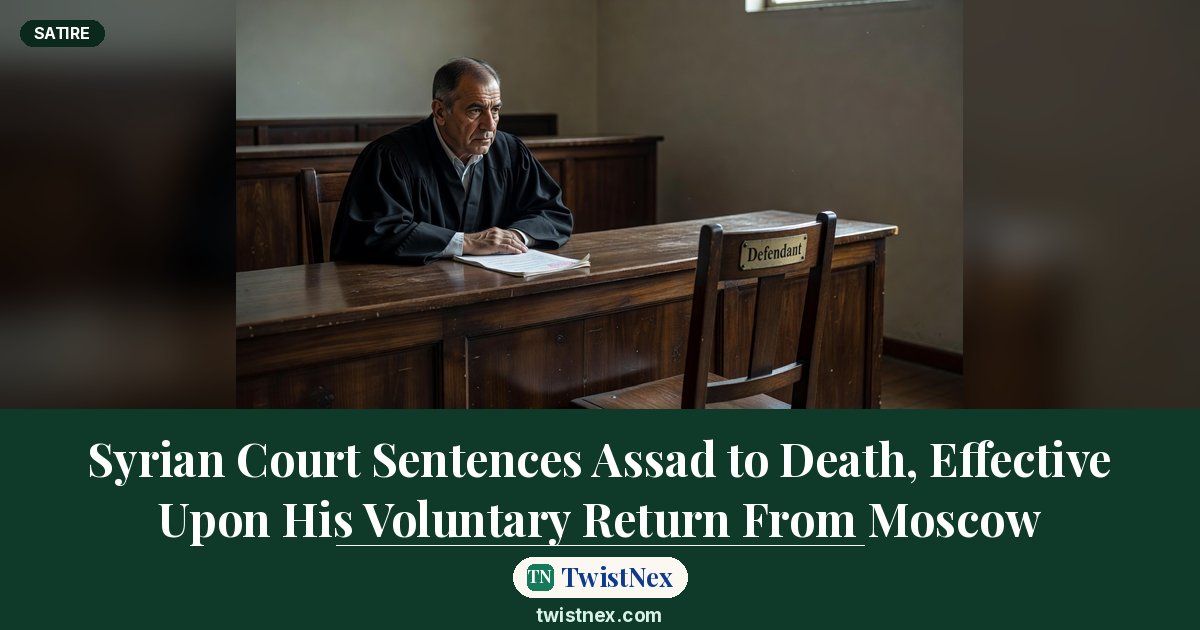
A Syrian court has sentenced Bashar al-Assad to death in absentia for war crimes and crimes against humanity, delivering the kind of justice that arrives after the accused has already relocated to a comfortable dacha outside Moscow. Officials described the ruling as a historic milestone, noting that it finally holds the former president accountable for actions he took while still in the building.
The verdict includes standard penalties such as asset forfeiture and loss of citizenship, none of which appear to affect Assad’s current schedule of quiet walks and state-sponsored tea. Legal analysts estimate the sentence will carry roughly the same practical weight as a strongly worded parking ticket issued to a car that left the country three years ago.
Court spokespeople emphasized that the decision sends a clear message to other leaders still in power: behave, or one day a tribunal might issue a dramatic ruling you can ignore from abroad. One anonymous official added that the panel briefly considered ordering Assad to appear via video call but dropped the idea after realizing no one wanted to watch.
The ruling comes as Syria’s new authorities focus on rebuilding institutions that collapsed under the previous regime. Observers noted the court worked efficiently, finishing the case in weeks once the defendant stopped showing up. International monitors called the process “symbolically robust,” a phrase usually reserved for resolutions that change nothing on the ground.
In related developments, the same court is reportedly drafting guidelines for future absentia trials, including a suggested dress code for empty chairs and a recommended soundtrack of polite applause. The guidelines are expected to be released once someone remembers where the previous government kept the stamps.