Uttarakhand Hydropower Projects Record More Worker Deaths Than Megawatts Produced This Year
Satire: TwistNex is a satirical publication. This is fiction inspired by real news. Quotes, experts and statistics are invented and must not be cited as fact.
India's hydropower projects are once again proving more lethal than productive, with tunnel collapses stacking up faster than the promised electricity.
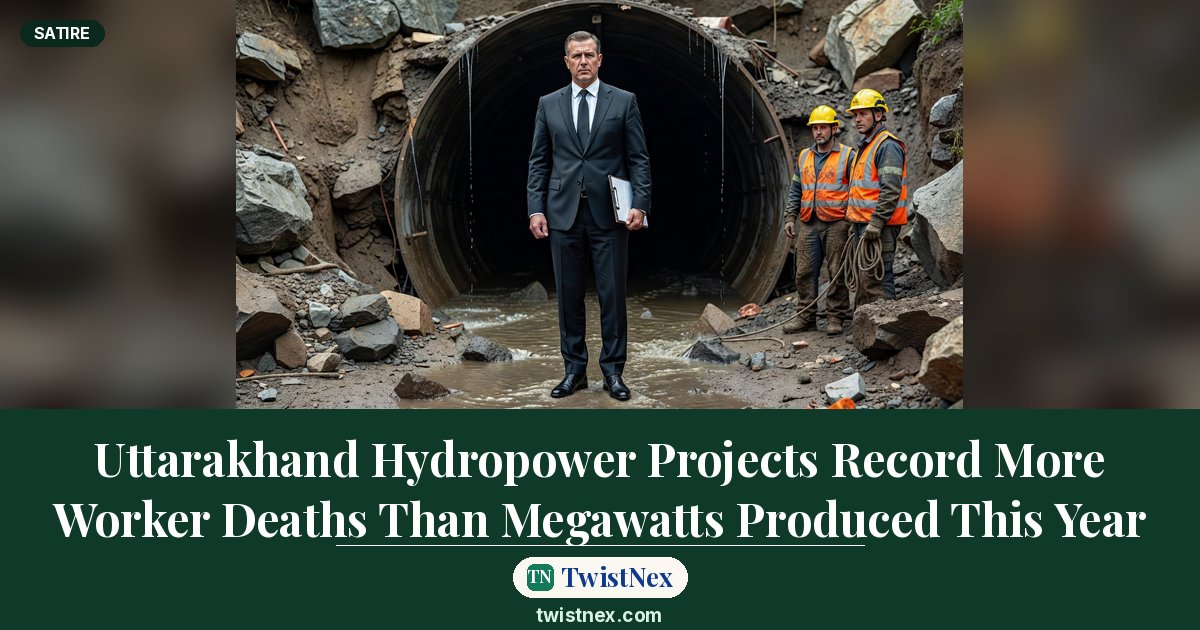
State-run hydropower projects in Uttarakhand have once again demonstrated their unique ability to convert construction sites into mass graves with impressive speed. A recent tunnel collapse claimed ten lives while seventeen others remain unaccounted for, following a similar incident weeks earlier that killed seven. Officials described both events as "unforeseen natural challenges," a phrase that has become standard after every landslide, water burst, and debris avalanche that the mountains keep delivering on schedule.
Rescue operations face the usual obstacles of hazardous conditions, limited equipment, and a paperwork trail that stretches longer than the tunnels themselves. Project managers insist safety protocols are state-of-the-art, though these protocols appear optimized mainly for generating press releases rather than keeping workers alive. One internal review reportedly recommended "more robust monitoring" after the first deaths, a recommendation filed in the same folder as previous recommendations that were never opened.
Environmental clearances for these projects were granted with the usual speed, bypassing concerns about unstable slopes and monsoon patterns that have existed for decades. Local communities have grown accustomed to periodic funerals paired with announcements that the next phase of construction will definitely be safer. Workers, meanwhile, continue entering sites where previous shifts were either evacuated or entombed, depending on how quickly debris moved.
The pattern suggests India's renewable energy targets may ultimately be measured in casualties rather than megawatts. Each new collapse is treated as an isolated tragedy requiring fresh inquiries, none of which have altered the underlying approach of prioritizing deadlines over geological reality. At this rate, the only sustainable output from these tunnels will be ongoing disaster coverage.