Analysts: Mutual Strikes Shorten Zaporizhzhia Plant Lifespan To Negative Three Years
Satire: TwistNex is a satirical publication. This is fiction inspired by real news. Quotes, experts and statistics are invented and must not be cited as fact.
Russia and Ukraine both claim they’re protecting Europe’s largest nuclear plant by bombing the area around it
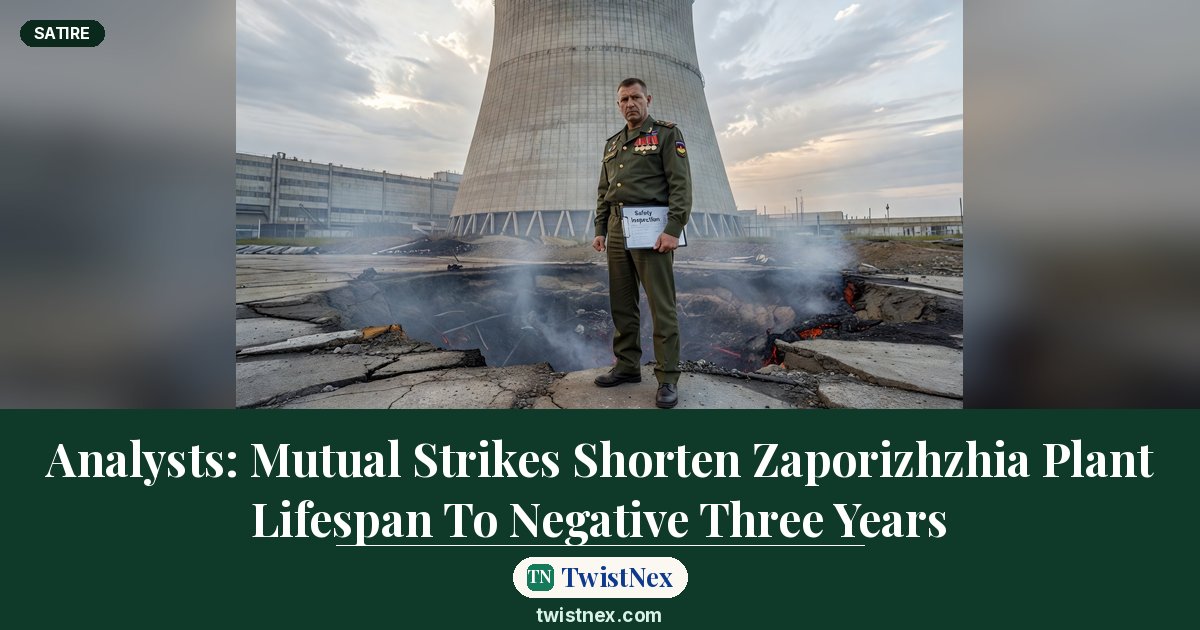
Russian forces reported a Ukrainian drone strike near the Zaporizhzhia nuclear plant on Monday, while Ukrainian officials described a separate Russian guided-bomb attack that cut power to the facility and killed three civilians in the city.
Military spokesmen on both sides insisted the incidents proved their commitment to protecting the plant. “We only hit the areas right next to the reactors,” said a Russian colonel whose name was withheld for his own safety. “This demonstrates precision and respect for international norms.”
Ukrainian commanders echoed the sentiment from the other direction. A Kyiv defense official, speaking on condition of anonymity because the statement was ridiculous, explained that the drone had been aimed at a nearby refinery but “accidentally validated the no-fly zone around the nuclear site by creating a small fire.”
Independent observers noted the plant has now lost external power six times since the full-scale invasion began. A fictional European Commission nuclear inspector, Dr. Heinrich Glowstick, told reporters the outages were actually beneficial. “Every time the lights go out, operators must rely on diesel generators, which is excellent training for when the plant is permanently offline,” he said.
Energy analysts projected that continued mutual strikes could reduce the facility’s operational lifespan to “negative three years,” a statistical achievement previously thought impossible. Local residents were advised to remain indoors unless they enjoyed the new ambient glow visible from orbit.
Neither government has offered to stop the attacks, citing the need to defend the plant from the other side’s attacks on the plant. The cycle is expected to continue until the reactors themselves file for asylum.