White House Weighs Lie-Detector Tests For Mail Ballots Postmarked From China
Satire: TwistNex is a satirical publication. This is fiction inspired by real news. Quotes, experts and statistics are invented and must not be cited as fact.
Supreme Court hands Trump mail-vote controls right as he discovers China is apparently living inside the envelopes.
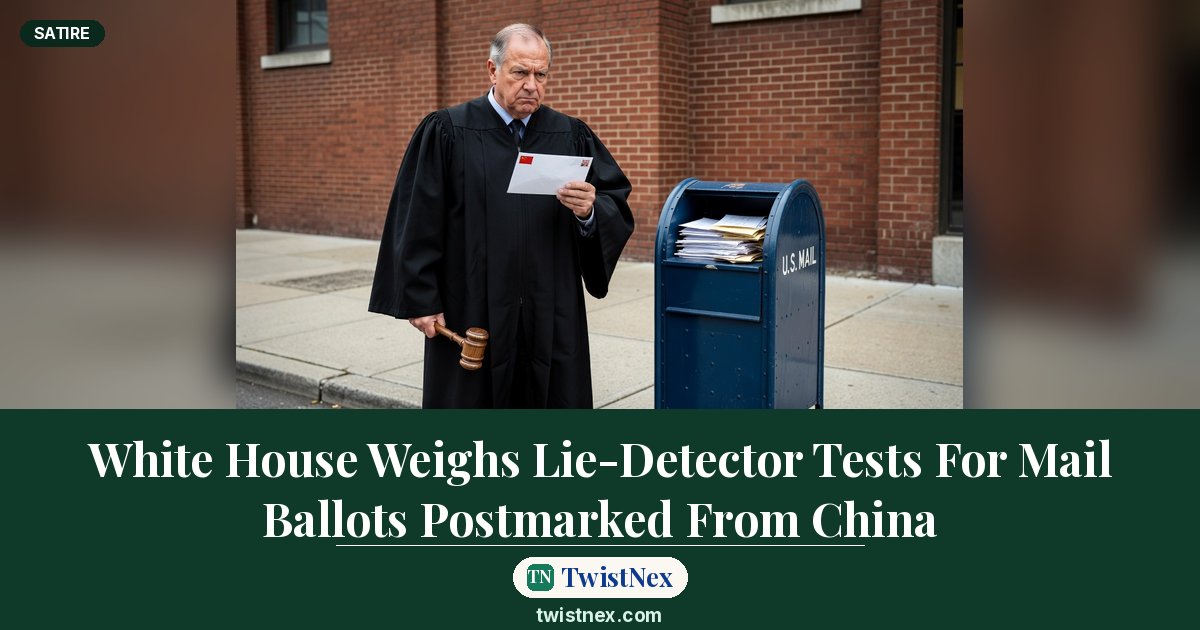
The Supreme Court has ruled that states may impose fresh limits on mail-in ballots, lifting an injunction across 23 states plus D.C. in a single unsigned order. The three liberal justices dissented, which, according to court watchers, is now the official way to register that something feels off.
President Trump immediately tied the decision to national security, announcing that China had meddled in the 2020 election by targeting mail ballots. Democrats countered that the timing looked like groundwork for disputing November results. Both sides appeared surprised that anyone was still surprised.
Legal analysts described the ruling as a routine procedural step that coincidentally hands election officials new tools right before the same officials will be asked to investigate foreign mail tampering. One anonymous administration source said the White House is now reviewing whether ballots postmarked from certain countries require extra stamps or perhaps a short lie-detector test administered by the postmaster general.
Conservative commentators praised the court for trusting states to run their own elections while simultaneously warning that those same elections are under foreign attack. Liberal strategists, meanwhile, floated the idea of printing ballots on paper that changes color if exposed to Chinese air, though they admitted the supply chain for such paper might itself be compromised.
Voter groups have begun preparing dual-track guidance: one pamphlet explaining the new ID rules and another explaining how to prove your ballot did not originate in Guangdong province. Turnout experts predict record participation among people who enjoy filling out extra forms.
The White House has not yet clarified whether the suspected Chinese interference involved actual ballots or merely the concept of voting by mail, which some officials now view as inherently suspicious. Either way, the court’s order remains in effect, and any future disputes will be handled through the usual channels of lawsuits, press conferences, and increasingly elaborate theories about postal workers.