Iran and Oman Designate Hormuz 'Civilians Only' Lane, Warships Asked to Use Nonexistent Route
Satire: TwistNex is a satirical publication. This is fiction inspired by real news. Quotes, experts and statistics are invented and must not be cited as fact.
Iran and Oman just created a military-free lane in Hormuz. Navies worldwide are already pretending they didn't see the sign.
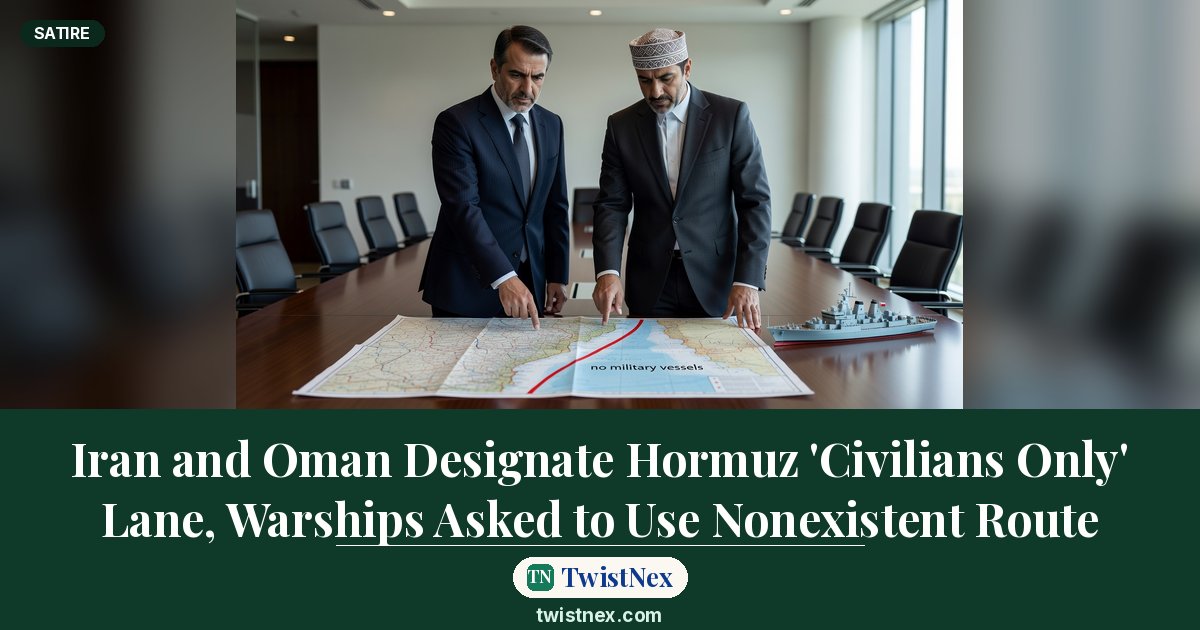
Iran and Oman have reportedly agreed on a temporary shipping corridor through the Strait of Hormuz that bars military vessels, a move presented as routine maritime housekeeping rather than an attempt to turn the world's most important oil artery into an exclusive yacht club.
Under the deal, warships from nations currently sanctioning Tehran would be asked to use an alternate route that does not yet exist on any known chart. Officials described the arrangement as 'interim' and 'cooperative,' language usually reserved for parking disputes between neighbors who both own artillery.
The United Kingdom responded by dispatching a warship to the region, apparently to ensure the new lane remains optional. US officials, meanwhile, reaffirmed sanctions while noting they still intend to transit the strait, creating the diplomatic equivalent of two drivers arguing over who gets the shoulder during rush hour.
A senior Iranian negotiator claimed the corridor would reduce tensions provided everyone simply respects the new signage. An Omani counterpart added that violations would be handled through 'appropriate channels,' which analysts interpret as strongly worded notes passed via satellite phone from increasingly expensive ships.
Oil markets reacted with the mild shrug usually reserved for weather forecasts, while shipping companies began pricing in the cost of rerouting around what is essentially a very large, very strategic 'keep out' sign. Experts predict the arrangement will hold until the first vessel tests whether the lane is actually enforced or merely aspirational.
The episode marks another chapter in the long tradition of powerful states treating critical waterways like shared driveways whose rules change depending on who is hosting the barbecue.