Jurors Tour Family Home to Test Whether Postpartum Psychosis Spreads Room to Room
Satire: TwistNex is a satirical publication. This is fiction inspired by real news. Quotes, experts and statistics are invented and must not be cited as fact.
Jurors just got a guided tour of the house where the children died—because nothing says fair trial like location scouting for the verdict.
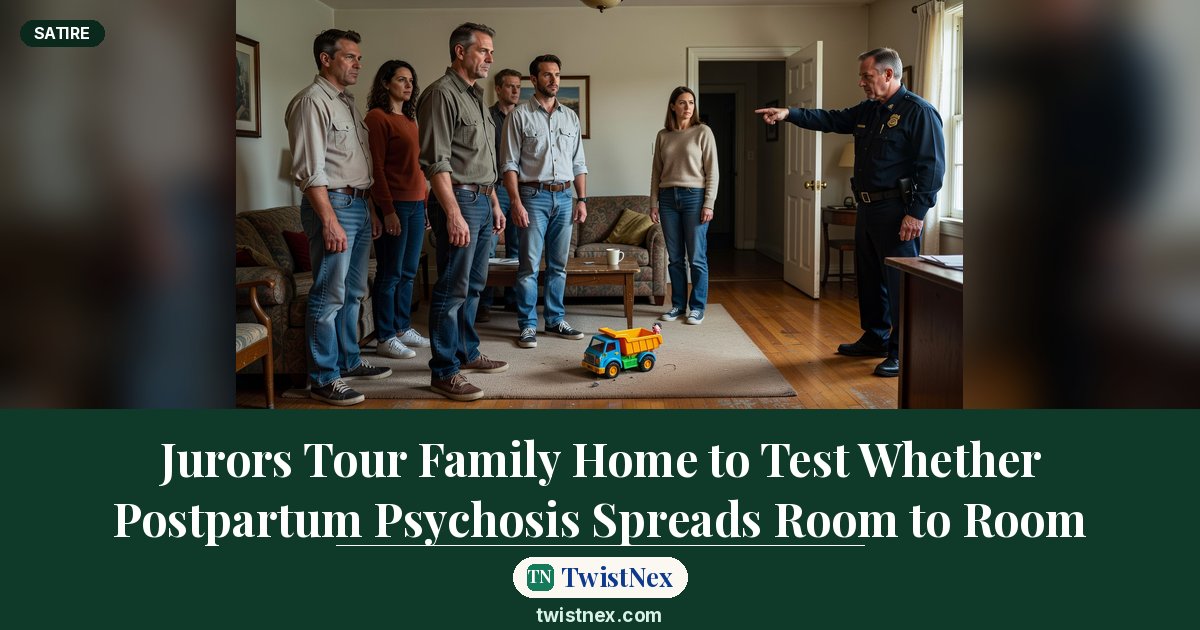
In a move that feels like sending the jury to the scene of the crime for method acting class, jurors in the Lindsay Clancy trial spent Friday wandering through the family home where three children died. Prosecutors insist the killings were calculated; the defense says postpartum psychosis turned an ordinary mother into someone who could not tell reality from nightmare.
The rare field trip let jurors inspect the exact rooms where the unthinkable happened, as if the floorboards might confess whether the illness was real or just a convenient plot twist. One imagines the tour guide whispering, “And here is where the psychosis allegedly peaked—please don’t touch the delusions.”
Outside, the jurors had already driven past two local businesses tied to the timeline, completing what amounted to a grim sightseeing package: crime scene plus coffee shop. Experts in the courtroom continue to debate the difference between deliberate action and a brain chemistry revolt so severe that the mother later tried to end her own life.
The case has become a Rorschach test for how society weighs maternal mental health against criminal responsibility. Prosecutors treat the illness claim like an overused excuse; the defense treats the calculation argument like a refusal to look at medical evidence. Either way, the house tour guarantees that twelve ordinary citizens will now carry the layout of a family’s collapse into the deliberation room with them.
When the verdict arrives, it will be shaped as much by those silent rooms as by any testimony. The home has already done its part: it stood there, ordinary and ordinary no longer.