Administration Expresses Shock as Courts Continue Treating Constitution as Binding
Satire: TwistNex is a satirical publication. This is fiction inspired by real news. Quotes, experts and statistics are invented and must not be cited as fact.
Courts treat Trump's mail-voting power grab like a subscription no one asked for and keep hitting cancel.
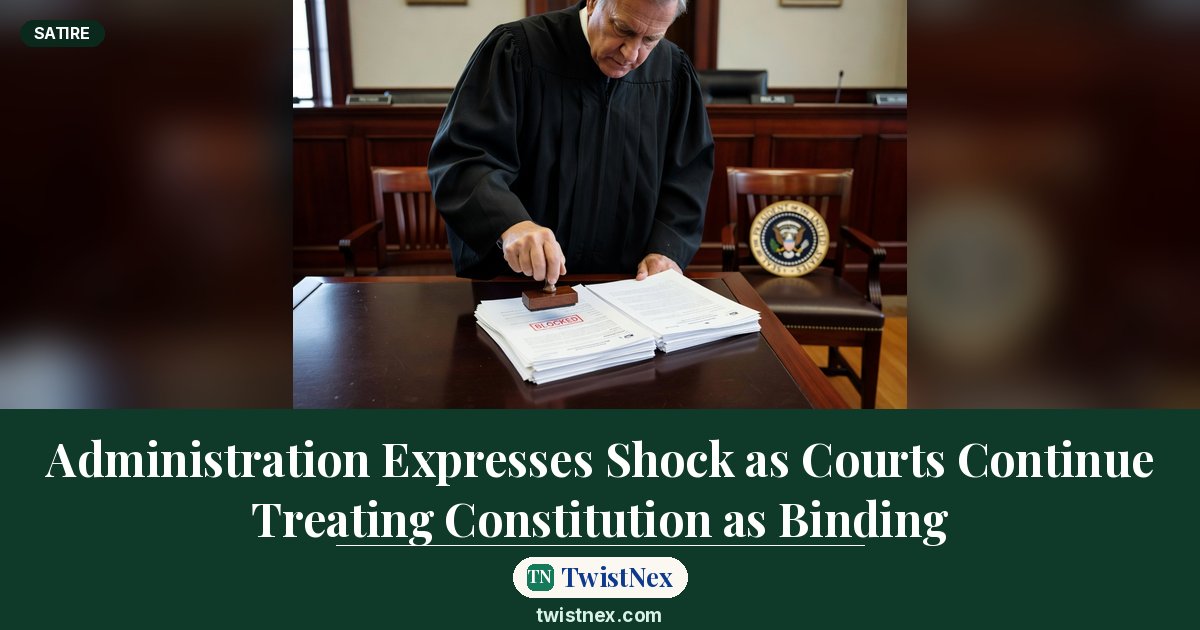
A federal appeals court has once again told the Trump administration it cannot simply hand the Postal Service the keys to deciding which Americans get to vote by mail. The ruling arrives days before ballots are due to hit mailboxes, proving that even the judiciary is developing a reliable allergy to last-minute election tweaks.
The blocked order would have let USPS officials approve state ballot envelope designs and maintain a federal list of absentee voters. Supporters called it routine oversight. Critics called it an attempt to decide who counts as a real voter without the messy inconvenience of Congress or state legislatures. The court chose the second interpretation, again.
Administration officials expressed surprise that judges continue to read the Constitution as though it were still in effect. One unnamed source described the decision as "deeply disappointing to people who were really looking forward to regulating democracy from the loading dock." Meanwhile, states reported they will proceed with their existing mail procedures, a development some analysts described as "shockingly normal."
The repeated blocks have created an unusual pattern in which courts treat executive mail-voting instructions like subscription services that keep failing to cancel. Legal experts predict further appeals, suggesting the case could outlast the actual election it was meant to shape. Postal workers, for their part, have been advised to focus on delivering packages rather than adjudicating voter eligibility.
In related developments, a White House advisor was overheard suggesting that if judges keep interfering, the next order might simply reroute ballots to a more cooperative address. No one could confirm whether that address was a post office or a different branch of government entirely.