Nepal Flood Rescue Now Prioritized by Passport Prestige, Officials Say
Satire: TwistNex is a satirical publication. This is fiction inspired by real news. Quotes, experts and statistics are invented and must not be cited as fact.
Nepal’s floods are tragic, but at least the Americans are getting proper media coverage for being in them.
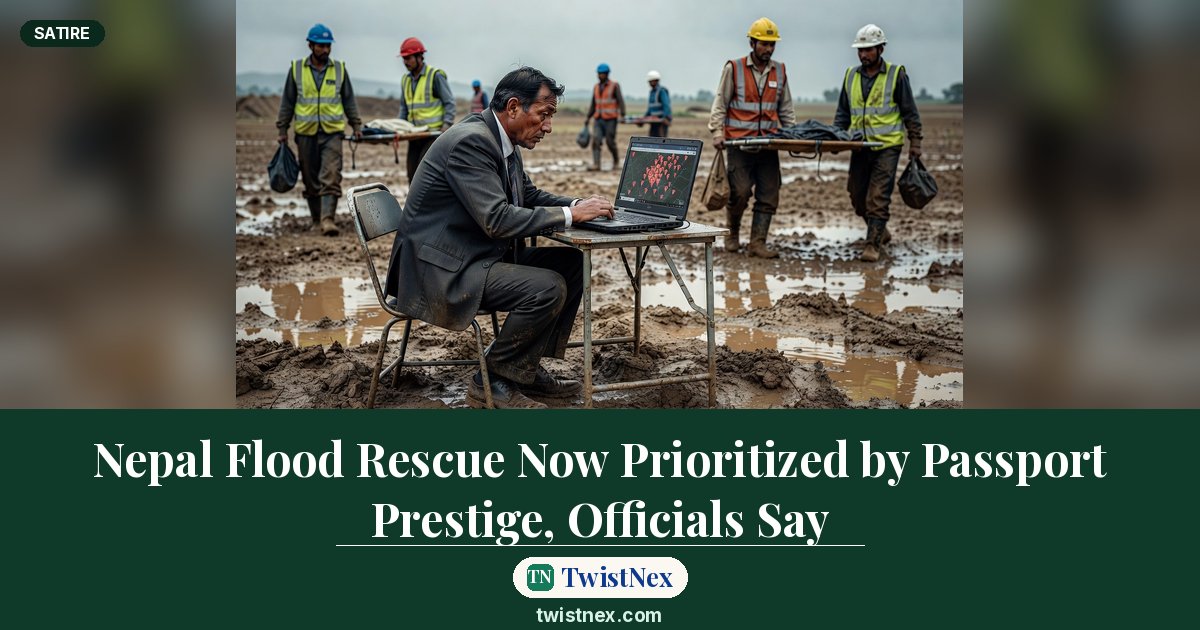
Satellite images of Nepal’s Bhotekoshi River basin show entire villages replaced by mud and rubble, yet the most pressing development remains the confirmation that dozens of U.S. passport holders were in the vicinity. Officials in Kathmandu and Beijing have both reported at least nine confirmed deaths with the toll expected to climb, while rescue teams continue pulling debris from collapsed hydropower projects and vanished roads.
The State Department issued its standard travel alert, which now carries the special asterisk reserved for incidents involving Americans. Local survivors, whose homes were swept away without the benefit of embassy press briefings, have been advised to wait their turn behind any U.S. citizens still unaccounted for. One Nepali district official, speaking on condition of anonymity, noted that rescue priorities are being adjusted “in descending order of passport prestige.”
A State Department spokesperson stressed that the department is “monitoring the situation closely,” which analysts interpret as checking flight manifests for American names before issuing further statements. International aid agencies have been asked to include American flags on supply crates so they can be identified at a distance. Meanwhile, experts at a Washington think tank released a hastily assembled study showing that flash floods are approximately 37 percent more newsworthy when they intersect with U.S. citizens.
The Bhotekoshi River has so far declined to comment on whether it verified nationalities before inundating the valley. Nepali and Chinese authorities continue clearing wreckage while fielding repeated calls from U.S. media asking for updates exclusively on the missing Americans. In related developments, several tourism boards have begun updating their brochures to note that the Himalayas remain scenic but occasionally damp.