Nepal Rejects Foreign Rescue Teams to Protect Sovereignty as 2,900 Remain Missing
Satire: TwistNex is a satirical publication. This is fiction inspired by real news. Quotes, experts and statistics are invented and must not be cited as fact.
Nepal politely declines foreign rescue teams as the missing list passes 3,000, because nothing says national pride like handling your own disaster alone.
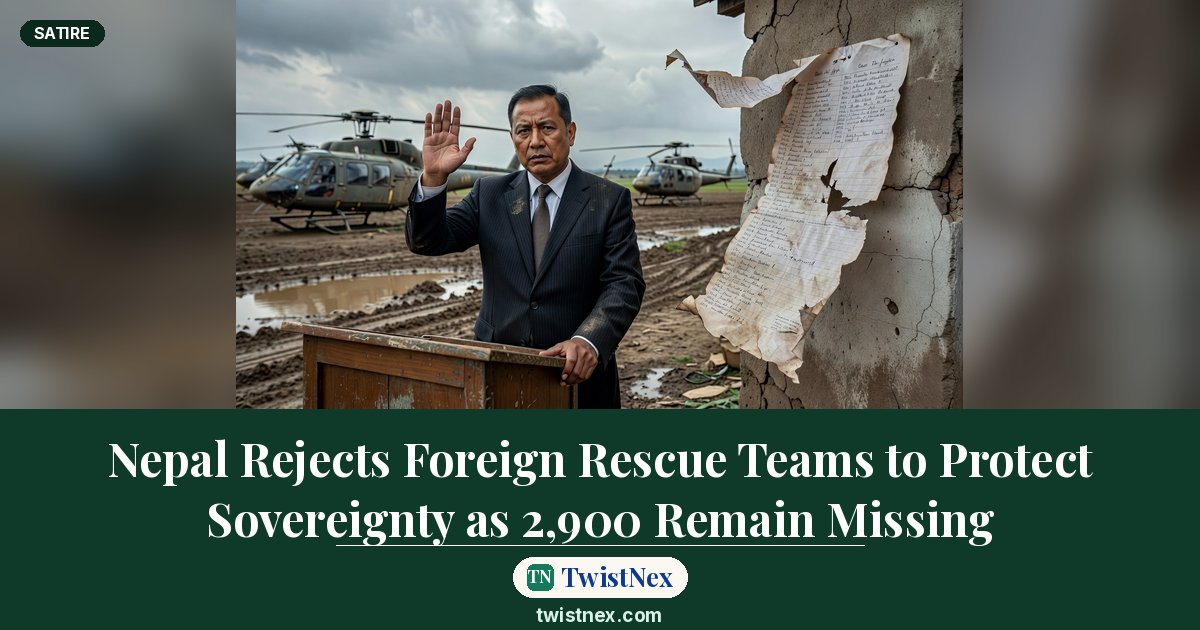
Nepali officials have politely declined international rescue teams even as the official missing tally climbed past 2,900 and the confirmed death toll passed 630. The decision was framed as a matter of national dignity, which is apparently more important than helicopters when 100 people are still trapped in a flooded tunnel.
A government spokesperson explained that accepting foreign aid would undermine local expertise, the same local expertise currently represented by pinned lists on army camp walls and families running their fingers down the names. Rebuilding costs are projected in the billions, but the country’s first priority remains preserving the right to manage its own disaster without outside meddling.
Search operations have been described as “challenging” due to terrain and weather, a diplomatic way of saying the existing resources are already stretched past breaking point. Meanwhile, neighboring China continues its own recovery on the Tibet side with noticeably less emphasis on procedural independence.
Survivors interviewed outside the same army camp reported that the flood “took everything,” a phrase now competing with official statements about sovereignty for most-used quote of the week. The Nepali disaster authority confirmed the latest jump in missing persons without offering any revised plan for finding them.
Foreign governments that offered help were reportedly thanked and then asked to stand by, indefinitely. Observers noted that the policy has at least succeeded in one measurable way: it has kept the story focused on who is allowed to help rather than how many people still need it.