Airlink Calculates Stadium Flyby To Millimeter Then Applies Same Precision To Canceling It
Satire: TwistNex is a satirical publication. This is fiction inspired by real news. Quotes, experts and statistics are invented and must not be cited as fact.
South African airline perfects daring stadium flyby then immediately perfects the art of canceling the encore once regulators notice
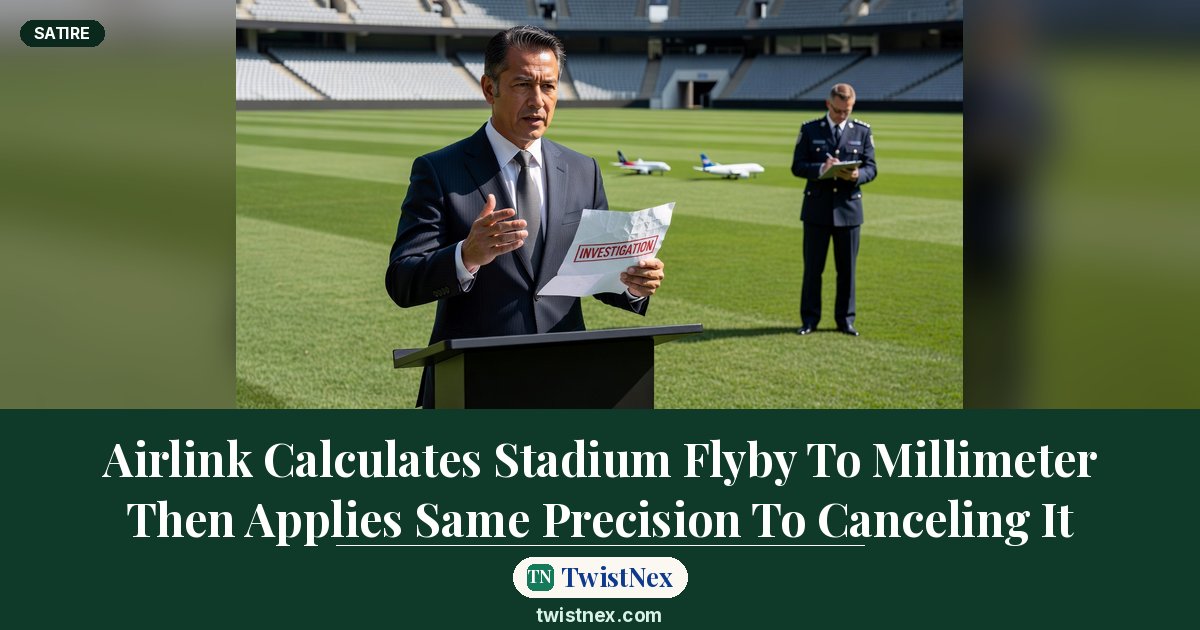
Airlink insisted its twin-plane flyover of a crowded South African stadium was the product of meticulous calculation right up until regulators announced they were looking into it, at which point the airline abruptly decided the next performance could wait forever.
Spokespeople described the low-altitude pass as a triumph of engineering and timing, executed so precisely that the planes cleared the stands by margins thinner than the average insurance disclaimer. The same spokespeople later clarified that repeating the maneuver would require additional approvals, which is corporate shorthand for "we have discovered consequences."
Civil aviation authorities, suddenly interested in the difference between a planned stunt and an unplanned incident, opened an inquiry. Airlink responded by demonstrating its commitment to safety through the time-honored method of not doing the thing again. Observers noted the decision aligned perfectly with the discovery that government paperwork exists.
Industry analysts praised the airline's flexibility. "They planned the flight to the centimeter," one consultant said, "and the cancellation to the same standard." Stadium officials, who had initially welcomed the spectacle, now describe the event as a valuable lesson in reading the fine print of aviation law.
The episode has prompted other carriers to consider similar cost-saving innovations, such as announcing dramatic routes and then charging passengers extra not to operate them. Airlink has not ruled out future displays, provided they occur at altitudes where regulators cannot easily notice them.