AI Busts 3,000 Ghost Citations in Med Papers, Confirming Science Is Just Fancy Fan Fiction
Satire: TwistNex is a satirical publication. This is fiction inspired by real news. Quotes, experts and statistics are invented and must not be cited as fact.
AI sniffs out 3,000 fake citations in med papers—turns out science is just scholarly fanfic! 😂 #FakeScienceScandal
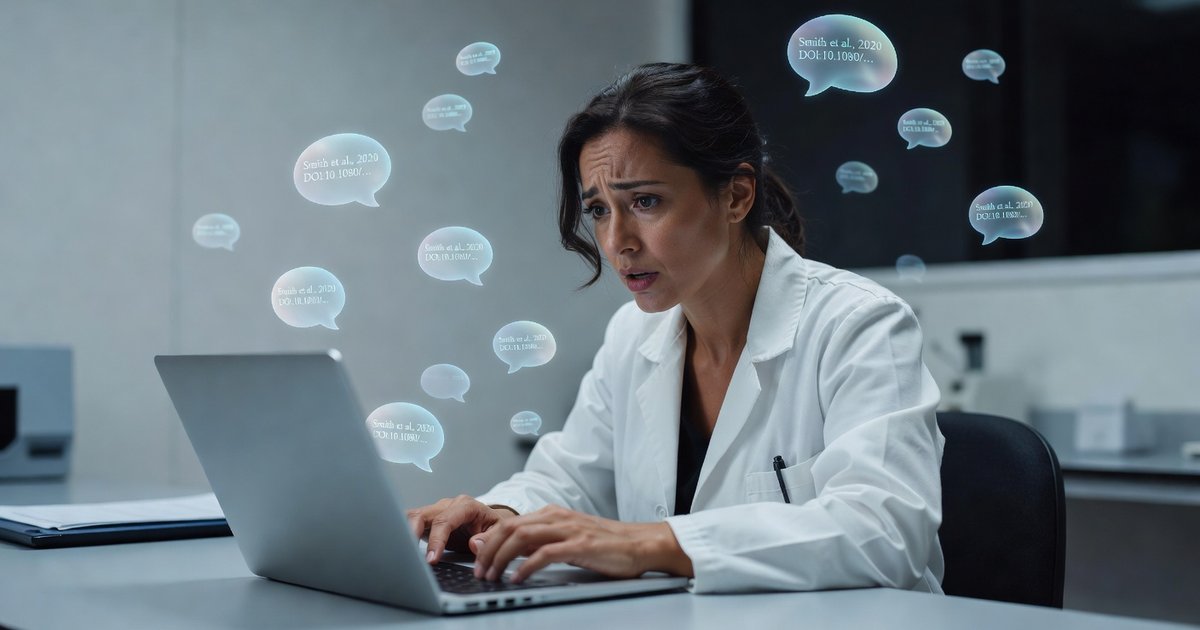
In a bombshell revelation that's got the white-coat crowd sweating more than a med student on finals, a Columbia University School of Nursing AI audit has exposed nearly 3,000 peer-reviewed medical papers riddled with citations to studies that don't exist—like, poof, vanished into the ether. Researchers, apparently too busy binge-watching true crime docs on PubMed, have been name-dropping phantom articles faster than a politician cites 'alternative facts.'
The audit, powered by the same AI that's probably ghostwriting your grandma's emails, scanned databases and found zilch for these spectral sources. 'It's like citing the Tooth Fairy's dissertation on cavity prevention,' quipped lead auditor Dr. Eliza Code, who insists her name isn't a pseudonym. As AI tools explode in academia—helping with everything from grant proposals to picking coffee flavors—the line between groundbreaking research and straight-up hallucination has blurred into a Rorschach inkblot of BS.
Picture this: A paper on curing cancer with kale smoothies references a 2023 study from the Journal of Imaginary Cures, authored by Dr. Ima Fraud. Spoiler: It doesn't exist, unless you're counting that fanfic on Wattpad. Experts blame the rush to publish in an era where 'impact factor' means 'how many likes on ResearchGate,' and AI assistants are churning out prose smoother than a Kardashian apology. 'Why bother with real data when ChatGPT can invent a meta-analysis overnight?' shrugged one anonymous tenured prof, hiding behind a stack of unverified PDFs.
The fallout? Universities are scrambling to implement 'citation lie detectors,' while journals roll out AI-proof submission forms that ask, 'Is this real, or did your bot dream it?' Critics warn this could tank public trust in science, already wobbling like a Jenga tower built on flat-Earth forums. On the bright side, at least now we know why that miracle diet pill never panned out—its supporting evidence was as real as Bigfoot's gym membership.
As the academic world grapples with this citation apocalypse, one thing's clear: In the age of AI, the only peer review that matters is whether your fake refs pass the vibe check. Stay tuned—next up, papers citing Elon Musk's tweets as empirical evidence.