Jury Deadlocked on Whether Psychosis Excuses Killing of Three Children
Satire: TwistNex is a satirical publication. This is fiction inspired by real news. Quotes, experts and statistics are invented and must not be cited as fact.
Jury deadlock exposes the fine line between mental health defense and "but I was stressed" for triple homicide.
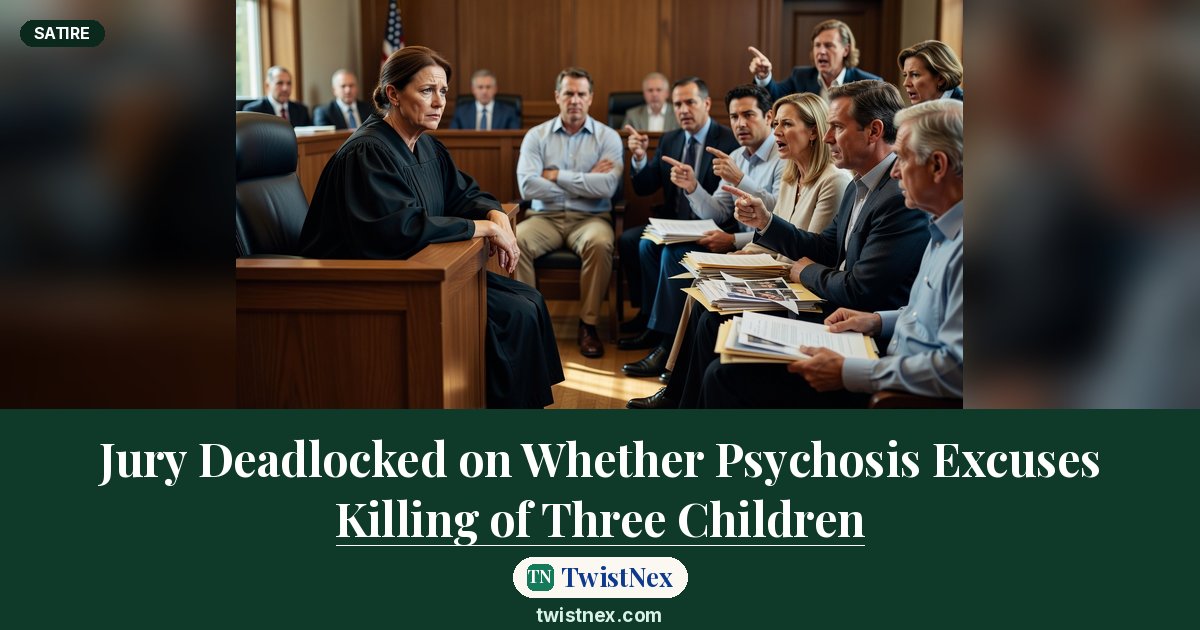
The jury in the Lindsay Clancy murder trial was sent home once more without a verdict, after six days of deliberations revealed one holdout juror refusing to treat severe mental health struggles as automatic exoneration for strangling three children.
Prosecutors presented evidence of premeditation while the defense argued postpartum psychosis turned an otherwise loving mother into an unwitting killer. The panel's foreperson reportedly told the judge that one juror insisted reasonable doubt required ignoring the psychiatric testimony entirely.
Legal observers described the impasse as a natural outcome when courts must weigh whether "I was not in my right mind" functions as a complete defense or merely a mitigating footnote. One fictional analyst from the Institute for Selective Empathy noted that if accepted, the precedent could allow future defendants to cite "workplace burnout" when explaining why they torched the office.
Outside the courthouse, advocates on both sides continued their campaigns. Mental health groups argued the case exposes systemic failures in maternal care, while victims' relatives maintained that no diagnosis erases the act of ending three lives. The jury's repeated returns without consensus suggest the legal system remains unwilling to issue a blanket policy on where tragedy ends and criminal responsibility begins.
As the panel prepares to reconvene Friday, court staff quietly updated the deliberation room with additional coffee and a fresh stack of jury instructions that continue to treat "not guilty by reason of insanity" as a narrow exception rather than a lifestyle choice.